
DISCOVER
who you are.
TRANSFORM
your life.
LIVE
your dreams.
Resources
I have collated a few resources you might find useful below...
Find Clients Quickly
This Free Guide Provides you with actionable steps to find clients quickly. Including a free 7 day challenge if you want to kickstart your client finding journey.
Balancing Act - Your guide to a better Work-Life Balance
Discover my top tips on how to get and sustain an amazing work-life balance when you run your own business.
Imposter Syndrome Guide
Imposter syndrome has many different aspects to it, whether you recognise the signs or not, this guide will help you get a deeper understanding of the different types of imposter syndrome and give you some tips to overcome it.
Free Facebook Group
Join my Free Facebook Group of small business owners, freelancers and coaches looking to find their FLEX, grow their business and feel fulfilled in life.
Blog posts...
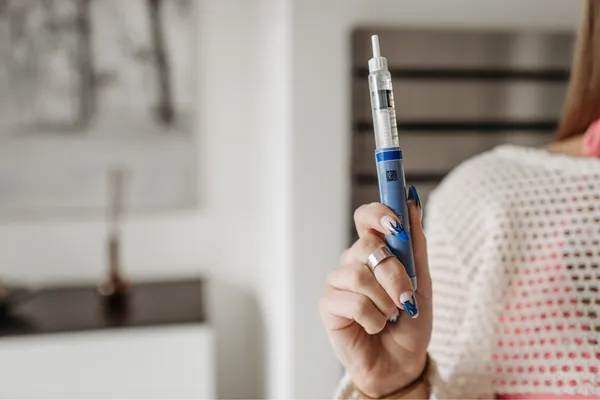
What Nobody Is Telling Women About Quick Fixes: HRT, ADHD Medication and GLP-1s
Before I go deeper into this topic, I want to point out that I am not anti-medication. HRT has genuinely changed lives. ADHD diagnoses have helped countless women understand themselves, something that they desperately needed. GLP-1 medications are helping people reclaim their health in ways that feel nothing short of miraculous to those experiencing it.
But the more I hear about these medications, combined with my interest in health, nutrition and nervous system, the more questions I have...
What happens long-term if we treat the symptoms but never address what created them in the first place?
First, let's talk about what millennial women have been through?
I don't think it is acknowledged enough how much this generation of women have been through, and when you look at it all, it't not surprising you might be feeling overwhelmed and struggling.
You grew up when ultra-processed food became the norm. Research shows that around 67% of total dietary energy consumed by young people in the US by 2018 was coming from ultra-processed sources. Those same foods carry endocrine-disrupting chemicals that interfere with hormonal regulation, and data from the National Health and Nutrition Examination Survey has shown that more than 90% of US adults have detectable levels of common endocrine disruptors like BPA in their urine. So through no choice of your own, your body and hormones have been impacted through environment you were raised in. Seeing these statistics, it's hardly surprising that we are seeing more people struggling with perimenopause symptoms.
You were also part of the first generation to grow up with the internet becoming a permanent fixture of daily life, and then the first to experience social media in such a big way. We know social media can rewire your sense of self-worth and belonging and for this to take hold during the years when your identity was still forming, you can see how you sense of self could be eroded. Constant social comparison, disappearing work-life boundaries, the relentless pressure to perform, to look a certain way, to have achieved certain things by certain ages. All of this has been running in the background of your nervous system for decades.
Then came the cost of living, the expectation that you could work like you don't have children and parent like you don't work and a pandemic that took away the support structures many women had quietly depended on. And through all of it, the standards set in your childhood, what you should be as a woman, as a mother, what success looks like, these haven't changed, you likely still have these ideals and in some cases they might have been reinforced through social media even as the goalposts kept moving and that ideal image becomes even harder to achieve.
Millennial women are in measurably worse health than the generation before them. Research has found that female millennials are in poorer health than their male peers, driven by higher rates of major depression, type 2 diabetes and endocrine conditions. A Gallup study found that 70% of millennial women say it is hard for them to prioritise their health, with lack of time, the overwhelm of it all, and work getting in the way as the most common reasons.
None of this is weakness. If you look at everything your body and mind have been through up until this point in your life, it is not surprising at all that you are struggling.
But here's something to consider...
Is getting a diagnosis the same as doing the work?
Something I am noticing is that a lot of women in their 40s are going through a period of self-discovery. They are exploring whether perimenopause explains their symptoms, they are getting ADHD assessments, many of them receiving diagnoses that genuinely make sense of a lifetime of struggles. Some are being diagnosed with ASD for the first time. And while these discoveries can be genuinely illuminating, I am concerned that the diagnosis is becoming the endpoint rather than the starting point.
That's not to say I don't understand why it might be, when you have spent decades being told you are too much, too sensitive, too scattered, too emotional, and then someone finally gives you a diagnosis that says "actually, this is how your brain is wired," the relief is enormous. It explains everything and it feels like permission to stop pushing so hard. And that can feel hugely validating.
But the nervous system dysregulation that is making perimenopause feel unbearable, that is amplifying ADHD traits to the point of crisis, that is making everything feel like too much, that didn't arrive because of the diagnosis - it's been amplifying to the point of diagnosis, and it's not going anywhere just from the label you now have.
The question I have been pondering, and still don't have an answer to is: how much of what women are experiencing right now is neurodivergence or hormonal change, and how much of it is an exhausted nervous system that has been running in survival mode for too long?
I think the answer is most likely both, but I think as much attention needs to be given to the nervous system as it is to other diagnoses.
What are the quick fixes doing?
It's worth stating here, that I think HRT, ADHD medication or GLP-1s are amazing and for many people, they are absolutely the right course of action. But I think the big question people should be asking themselves is, What is the goal when choosing them?
I have seen both sides of this. have seen what happens when the goal is clear and rooted in genuine self-understanding. I have spoken to women who started a GLP-1 medication after an injury that had kept them sedentary for years causing them to put on so much weight that exercise became difficult, event after their injury resoled, they lost enough weight to be able to exercise again and found their way back to the hobbies and the physical aliveness they had missed, and for those people, the GLP-1's were a brilliant tool - because the self-awareness and habit changes came alongside it.
On the flip side, I have also seen women who are doing what they believe is everything right, and yet when you spend real time with them, a very different picture emerges.
Someone who says they are doing everything to lose weight but over the course of a day eats two portions of junk food and several pints of beer. Not because they are dishonest, but because they genuinely don't see it.
Someone who says they don't eat processed food, but when asked about a typical day they describe bread, crisps, sweets, sausages, ice lollies. They have a different definition of processed than the one that matters for their health.
Someone who tells you they fast for eighteen hours a day but has a high-calorie drink before bed, then doesn't sleep, then can't understand why nothing is working.
Someone who goes to the gym four times a week and cannot figure out why they aren't losing weight, not noticing the large coffee and cake that follows each session, or the junk food on the way home.
Someone who goes to counselling to understand their relationship with food, but never mentions to the counsellor that they binge eat.
I share these examples not to criticise, but because I recognise the pattern. These are not people who are failing. They are people whose patterns are running so far below conscious awareness that they cannot see them. And that is what a chronically dysregulated nervous system does. It keeps you in survival mode. It keeps the most important truths just out of reach, because facing them feels too dangerous.
No medication changes that. Not in the long run.
So what actually works?
The medications (HRT, GLP-1, ADHD medication) offer the relief, and this relief provides an opportunity for the deeper work. Where the GLP-1 reduced the relentless food preoccupation, the HRT reduces the brain fog and other symptoms, a window is created to build more nervous system capacity.
The patterns that were there before the medication will still be there; the people-pleasing, the inability to say no, the tendency to put everyone else's needs before your own, the harsh inner voice that is never kind to you, the way your body tenses before certain conversations, the relationships that drain you, the dreams you quietly shelved because someone, at some point, told you they were unrealistic.
These are nervous system patterns. They formed throughout your life in response to your environment, your relationships, your experiences. And they will not dissolve because your perimenopause symptoms have eased or your ADHD is better managed. If anything, having more capacity can mean you feel them more clearly, because you are no longer too exhausted to notice them.
The deeper work is understanding where those patterns came from. Why your body responds the way it does. What your nervous system learned about safety, about belonging, about what you had to be in order to be loved. That's the deep work, it isn't quick but it is the only work that creates lasting change.
And here is what I want to offer as a gentle challenge: if you are taking medication, or considering it, ask yourself what you are hoping life looks like on the other side. Not in terms of a number on a scale or a quieter mind, but in terms of who you are, what you do, how you spend your time, what you will stop tolerating and most importantly what you start believing about yourself.
If the answer is rooted in something real, something that connects to the version of you that you actually want to become, then you are in the right place to do this well.
If the answer is vague, or mostly about how you will look, or about finally being enough for someone else's standards, then the medication will not get you there. And it was never going to.
The question nobody is asking
My honest concern about the wave of quick fixes available to women right now is not that they don't work. Many of them clearly do, at least in the short term. My concern is what happens if the pattern underneath is never addressed.
Are women going to be on these medications indefinitely? For some, perhaps yes, and that is a valid medical choice. But for others, I wonder whether there is a version of this where the medication creates the breathing room, and the deeper work done alongside it gradually shifts the baseline enough that the reliance on the medication can reduce over time. Not for everyone. But for more people than are currently exploring that possibility.
Nobody is really asking this question yet, because these medications are still relatively new and the cultural conversation is still mostly about access and results.
Your nervous system has a baseline. It learned that baseline from everything you have experienced, and that baseline can change. Not quickly, and not without effort, but it can change.
If you recognise yourself in any of this
You might be reading this feeling seen, or feeling challenged, or feeling both at once. That response itself is worth paying attention to.
If you are already on medication and it is helping, that is worth paying attention to. And if you have a quiet sense that there is something more to do alongside it, something deeper to understand, then that instinct is probably right as well.
If you are considering medication and wondering whether it is the answer, I would gently ask you to sit with the question of what problem you are actually trying to solve. Not the surface problem, the real one underneath it.
And if you are not sure where to start, or you want to share your story with someone who will listen without judgement and help you see what your patterns actually are, I would love to hear from you.
Book a free discovery call and let's talk about what's really going on for you. Or if you're not quite ready for that, email me your story and I'll do my best to point you in the right direction.
You have been through a lot to get to this point. The question now is what you do next.

Find me on: